
July 29, 2026
While women affected by symptoms associated with menopause can turn to hormone replacement therapy (HRT), conflicting epidemiological evidence makes it hard to assess whether HRT will increase or decrease their chance of later developing Alzheimer’s disease. Nevertheless, current guidelines recommend that HRT start within 10 years of menopause onset or before 60 years of age. With a new Women’s Health Initiative Award from the Massachusetts Life Sciences Center (MLSC), MIT researchers plan a study to discover the mechanisms of molecular and cellular changes by which HRT shapes individual women’s Alzheimer’s risk.
The goals of the research team, led by Picower Professor Li-Huei Tsai in The Picower Institute for Learning and Memory and Professor Manolis Kellis in the Computer Science and Artificial Intelligence Lab, are to identify risk factors that will help women and their physicians make more informed and personalized decisions and to accelerate the development of therapies that optimize the positive benefits and prevent any adverse effects of HRT in women who may be at risk.
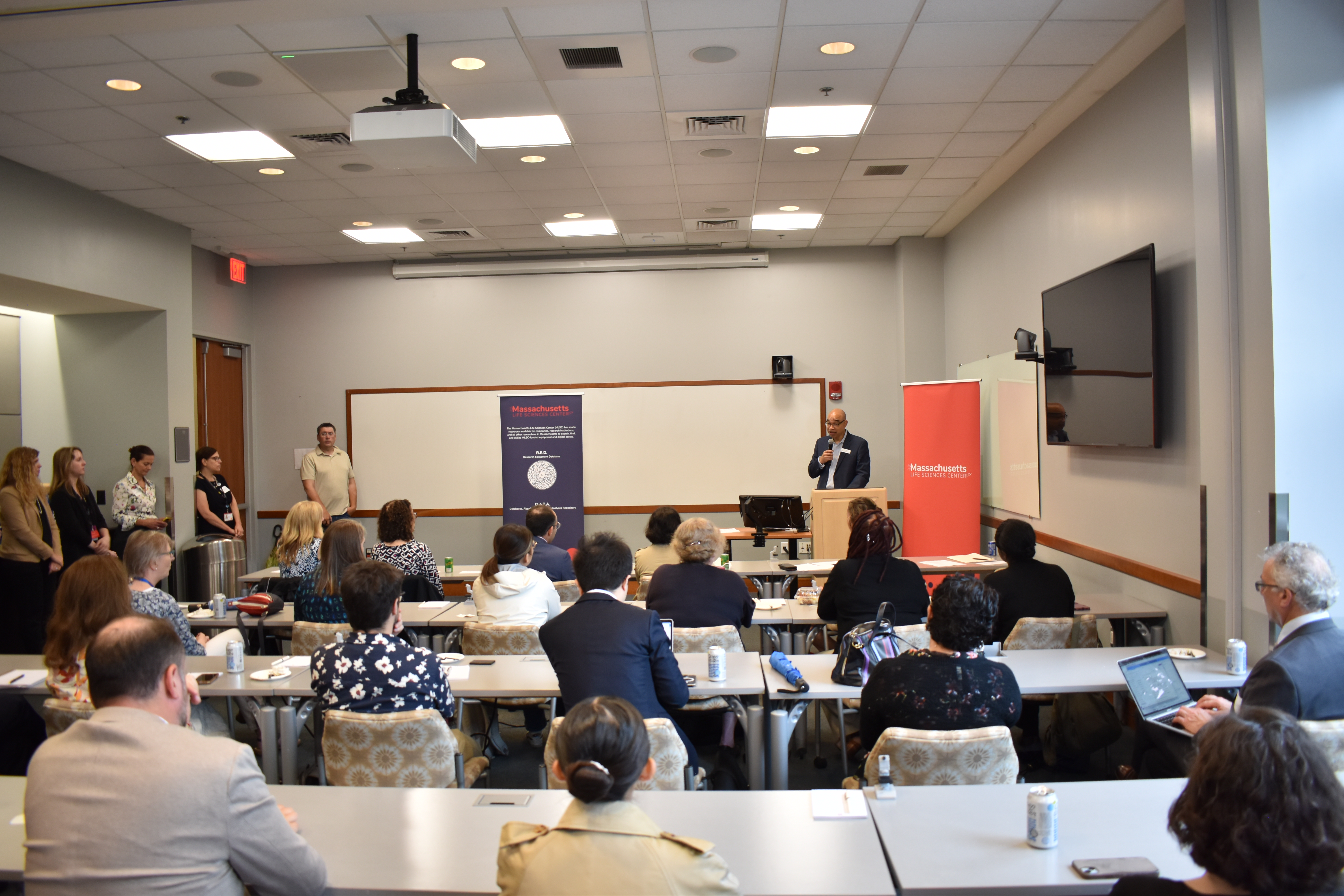
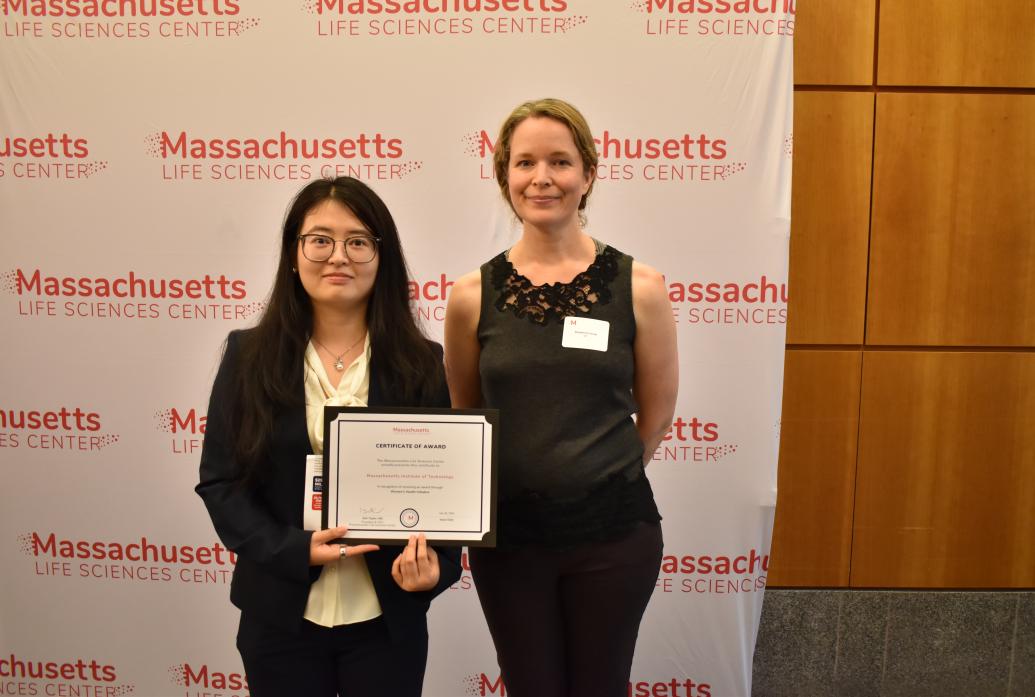
MLSC officials announced the Women’s Health Initiative Awards July 29 at Boston Medical Center. Shanshan Zhang, a Kellis Lab postdoc who will lead much of the work and Rosalind Firenze, the scientific program director of MIT’s Aging Brain Initiative (ABI) were on hand to accept the award. Tsai and Kellis are founding members of the ABI.
Above: Shanshan Zhang and Rosalind Firenze with the certificate of award after the announcement at Boston Medical Center.
The study will begin with “big data” transcriptomic, epigenomic and metabolomic profiling of 369 women who donated brain tissue samples post-mortem. The dataset will enable the researchers to gain deep insights into how HRT, when administered, affected the molecular and cellular activity of each woman’s brain cells over time and how that varied with individual factors such as genetic background, the timing of HRT treatment (if any), aging, and whether they developed Alzheimer’s. For instance, preliminary data suggests that in women who do develop the disease, there are problems such as inflammation and regulation of cholesterol needed to produce a protective lining for brain cells called myelin. The analyses can help predict which gene expression and molecular changes may lead to those cellular problems that could increase risk.
Another central question is why HRT taken during midlife may have effects that persist in the brain decades later. The researchers hypothesize that hormone exposure creates a lasting molecular memory by reshaping the 3D organization of the genome, changing which genes brain cells can activate or suppress as they age. They will therefore examine how HRT and aging alter genome architecture and whether these changes help explain the differences they observe in gene expression, metabolism, inflammation, cholesterol regulation and myelin maintenance that may ultimately influence Alzheimer’s risk.
As these computational analyses yield specific predictions, the researchers will test them in the lab using advanced 3D brain tissue models called cerebral organoids. These cell cultures, created by transforming skin cells donated by patients into stem cells and then into various brain cell types, will provide the scientists with live experimental platforms where they can test and observe how estrogen or progesterone affect the cells’ ability to regulate cholesterol, produce myelin and produce inflammation. In particular, they can test whether those vary based on the cells’ genetic background. For example, the team plans to see whether there are important differences in organoids with the APOE4 gene variant, the single largest genetic risk factor for Alzheimer’s, vs otherwise identical organoids with the non-risk APOE3 variant.
Finally, the team will input their predictions about the underlying molecular processes that mediate HRT’s role in protection or promotion of Alzheimer’s into AI systems to predict new treatments that support risk mitigation. Then they will test those treatment possibilities in the organoids to identify the most promising ones.
“Up to 80 percent of women experience vasomotor symptoms during menopause, yet only about one in four receives treatment,” Zhang said. “For those who do, hormone therapy remains the most effective treatment and is the most commonly prescribed medication, even as its long-term effects on brain health remain incompletely understood. Through this research, we hope to provide the evidence needed to help women and their physicians decide whether, when and how to use HRT based on individual factors such as APOE genotype and Alzheimer’s risk. By revealing what HRT changes in the brain, the molecular mechanisms through which those changes persist, and how they interact with Alzheimer’s pathology to influence or protect against cognitive decline, we also hope to identify the windows in which intervention could be most effective.”