


July 27, 2026
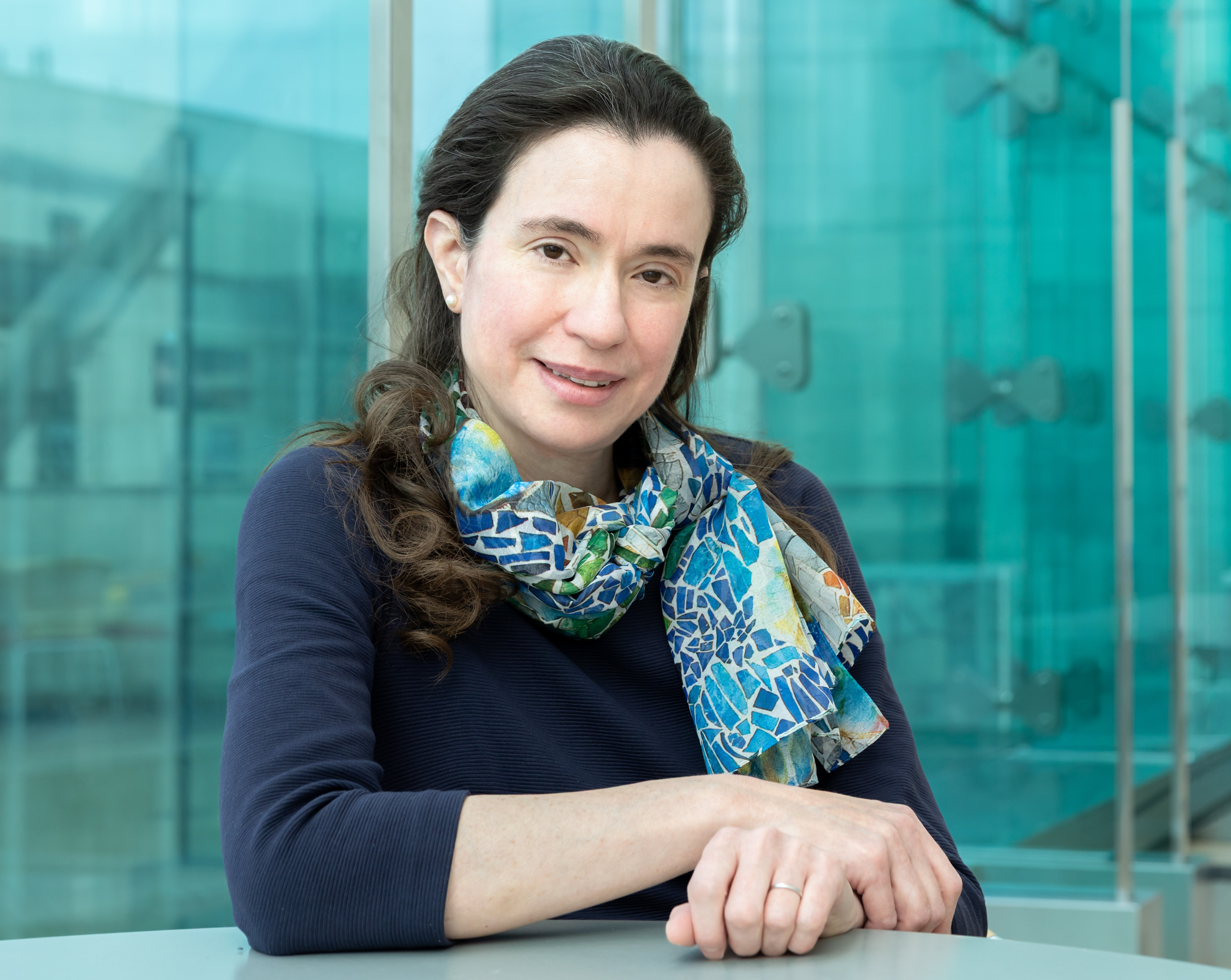
On July 1, Professor Myriam Heiman took the reins of The Picower Institute for Learning and Memory from Picower Professor Li-Huei Tsai, who served in the role for 16+ years.
Heiman’s research employs several advanced technologies and techniques to investigate why certain types of cells in specific brain regions are particularly pivotal and vulnerable in diseases such as Huntington’s disease, Parkinson’s disease, schizophrenia, and addiction. Her work sits at the intersection of rapid technological advances that are accelerating discovery and a research continuum that spans fundamental neuroscience and biomedical translation.
In her new role as director, we asked Heiman to answer some big picture questions about her outlook for the field and the Institute at an exciting but also uncertain time for neuroscience.
Q: What’s your take on the state of neuroscience research, both in general and at The Picower Institute?
We are making great strides at all levels, from the level of molecules and genes to neuronal circuits to whole organisms’ behavior. We are at a pivotal moment where new methods and models, including AI, are accelerating discovery, allowing us to cross traditional boundaries. We used to be either “molecular,” “cellular,” or “systems” neuroscientists but those lines are blurring as we gain these new capabilities. What’s unique about The Picower Institute is that when you consider the work here in its totality, we span all those areas. That’s not often the case in research centers, but here we leverage these diverse areas of expertise that we have across our research groups to collectively better understand the brain at all levels.
You can see that happening everywhere, for instance a few years back when Susumu Tonegawa, who employed molecular biology approaches to neuroscience, and Kwanghun Chung, whose work is based in chemical engineering, collaborated to map the neural traces of a memory, cell by cell, across a whole brain. It’s also evident in a new study where Steven Flavell and Brady Weissbourd, who each span molecular to systems scales in different model organisms, collaborated to show how new AI tools enable us to track neural activity in live animals to achieve new insights into the connection between brainwide neuronal activity and natural behavior. There’s really exceptional ingenuity in our newest research group, where Linlin Fan is developing powerful light-based methods to determine exactly how brains forge connections to store and represent memories. Another example comes from Troy Littleton, who recently harnessed advanced techniques to comprehensively document how individual neurons distinguish themselves by editing their RNA.
Our ability to innovate and cross boundaries goes well beyond our own research groups, encompassing also close ties and collaborations with our exceptional colleagues here at MIT in Brain and Cognitive Sciences, in The McGovern Institute, the Biology department and the School of Engineering. Both Mriganka Sur and Elly Nedivi have made amazing advances in neural and brain imaging, for instance, in collaboration with Professor Peter So in Mechanical Engineering. Matt Wilson’s lab, which has a long track record of creating open source hardware for the neuroscience community through Open Ephys, has meanwhile been pushing other frontiers of imaging, with Ed Boyden, a Picower affiliate and professor in BCS, the McGovern Institute, and Biomedical Engineering.
Q: How are these advances improving our prospects for treating disease?
Our mission is to understand the fundamental properties of how the brain works to also improve understanding of disease. When Susumu founded the Picower as a center in 1994, this vision was almost in the realm of science fiction for some diseases. I feel great optimism that this vision will be fully achieved because new tools, collaborations, and insights are allowing us to accelerate the pace of research and discovery. We can now hope to be able to solve some of the fundamental questions regarding disease mechanisms that we posed many years ago.
In my own work, for instance studying the brain’s striatum, we have been able to accelerate discoveries because of recent advances in single cell RNA sequencing and in computational analysis and machine learning. Working with Manolis Kellis in MIT’s Computer Science Artificial Intelligence Lab, we’ve been able to much more comprehensively atlas the striatum’s cell types, which not only increases our fundamental understanding of cell type diversity of this important region, but also gives us new insights into Huntington’s disease, schizophrenia and also opioid use disorder. Our findings are providing the foundation for tools to perturb those cell types that seem especially vulnerable in neurodegenerative and psychiatric disease. And that’s just one example, of course. Li-Huei Tsai has produced groundbreaking work to understand the changes Alzheimer’s disease causes in multiple cell types in multiple regions. Her group has published many papers and insights in this area, including the very important transcriptional and epigenetic changes in microglial immune cells that contribute to Alzheimer’s disease pathology.
Another great example is the highly novel work Gloria Choi has done to map the role of certain immune system signaling receptors across the brain. In a pair of studies last year, she showed how neuroimmune interactions affect social behavior, including phenotypes related to autism spectrum disorders (ASDs) and anxiety. Mark Bear has continued to break new ground in finding new treatment strategies for fragile X syndrome, an ASD, and his work holds great promise toward developing the first treatment for adults with the vision disorder amblyopia. Meanwhile, using innovative methods, a collaboration between Earl Miller, Emery Brown and BCS/McGovern colleague Ila Fiete has uncovered a potential universal signature of unconsciousness under general anesthesia that can be used to improve patient care during and after surgery (see p. 3). And Sara Prescott, who is pioneering studies of the nervous system in the airways and lungs, and Tsai Lab research scientist Ravi Raju, who is also a pediatrician, are both collaborating with Broad Institute researchers to study the biological effects that adversity and stress have on the brain and body. There are many more examples, too, where fundamental research in the Institute has led to new strategies for therapeutics, including clinical trials. Mriganka’s preclinical research, for instance, helped lay the scientific groundwork for the first FDA-approved therapy for Rett syndrome.
Q: What’s needed now to realize all this potential?
For 24 years we’ve been enormously privileged to build our research community on a foundation laid by the generosity of Barbara and Jeffry Picower in 2002, and sustained ever since by The Picower Foundation, The JPB Foundation and now its successor, the Freedom Together Foundation led by Deepak Bhargava. Susumu, Mark and Li-Huei have worked with them over the years to establish programs that, among many other things, have helped to seed fund our boldest research ideas, to support junior faculty as they approach tenure, and to support postdoctoral and graduate student trainees in their research. I can’t say enough about how exceptional and important that support has been—and remains—for enabling our excellence, not just in advancing truly cutting-edge research but also for training the next generation of neuroscience leaders.
Specifically, this support has always been instrumental in helping us take our highest-risk, highest-reward ideas from conception to the point where we have enough evidence to then support the work further with federal funding, which is traditionally less tolerant of risk. Our most productive lines of research were launched by philanthropy and then developed further with government grants, typically from the National Institutes of Health.
In the last couple of years, however, the federal funding picture has become much less certain. Recently MIT President Sally Kornbluth shared what changes in federal policy have meant for MIT. With an increase in the tax on MIT’s endowment and ongoing changes in how federal science funding is spent—even when fully allocated by Congress—federal research awards at MIT have dropped by 20 percent this year. The fiscal year is not over quite yet, but as of now, there have been noticeably fewer new federal grants to Picower Institute labs. Across MIT, including The Picower Institute and our affiliated academic departments such as BCS, these changes not only stand to reduce research volume, but also our ability to bring on graduate students who represent the future of the field.
In this new climate, we are beginning to think differently about what “public” support means. Every family is touched in some way by developmental, psychiatric, neurological, or neurodegenerative disease, and all of us share a fascination with how the brain enables us to think, learn, create, remember, and connect with one another. By investing in neuroscience research, supporters can play a direct role in advancing discoveries that have the potential to improve countless lives. By supporting our work and our scientists directly, individual donors are now poised to become even more essential contributors to the solutions to some of the most compelling mysteries and the most urgent challenges of neuroscience.
We have never had better approaches and tools to understand the brain and never had a greater opportunity to translate discovery into benefits for human health. The questions are still enormous, but for the first time many of them feel within reach of being solved.


