


May 22, 2026
At an MIT School of Science ceremony May 21, Picower Fellow Takato Honda, Research Scientist in The Picower Institute for Learning and Memory, received the Infinite Expansion Award.
The award honors academic staff in the school who have gone above and beyond their required duties, highlighting the dedication, skill, and effort that support the mission of their research groups and the school.
“Takato is a talented scientist, a rigorous and creative thinker with exceptional curiosity and a passion for science, a dedicated teacher and mentor, who has expanded the scientific mission in the School of Science through his innovative and collaborative efforts,” said Sherman Fairchild Professor Matt Wilson, The Picower Institute professor who oversees Honda’s research.
Above: Honda and Wilson at the award ceremony May 21.
Honda’s nominators included Wilson, Assistant Professor Brady Weissbourd, Associate Professor Gloria Choi, and Picower Communications Director David Orenstein, but also included eight additional quotes from faculty, colleagues, and students. As an educator, Honda has been mentoring many MIT students and leading science tours for high school students.
In the lab, Honda has been pursued a unique and independent research agenda through his Picower Fellowship, the Alkermes Pathways Research Award, the Kavli-Grass-MBL Fellowship, and other funding sources.
For instance, as part of his programs jointly as a Whitman Fellow and Scientist at the Marine Biological Laboratory (MBL), Honda recently discovered a new species, Stentor hondawara, the first fully ‘marine’ Stentor species, distinct from the habitats of all currently known freshwater Stentor species. That’s even though there are more than 200 years of history since the initial description of the Stentor genus.
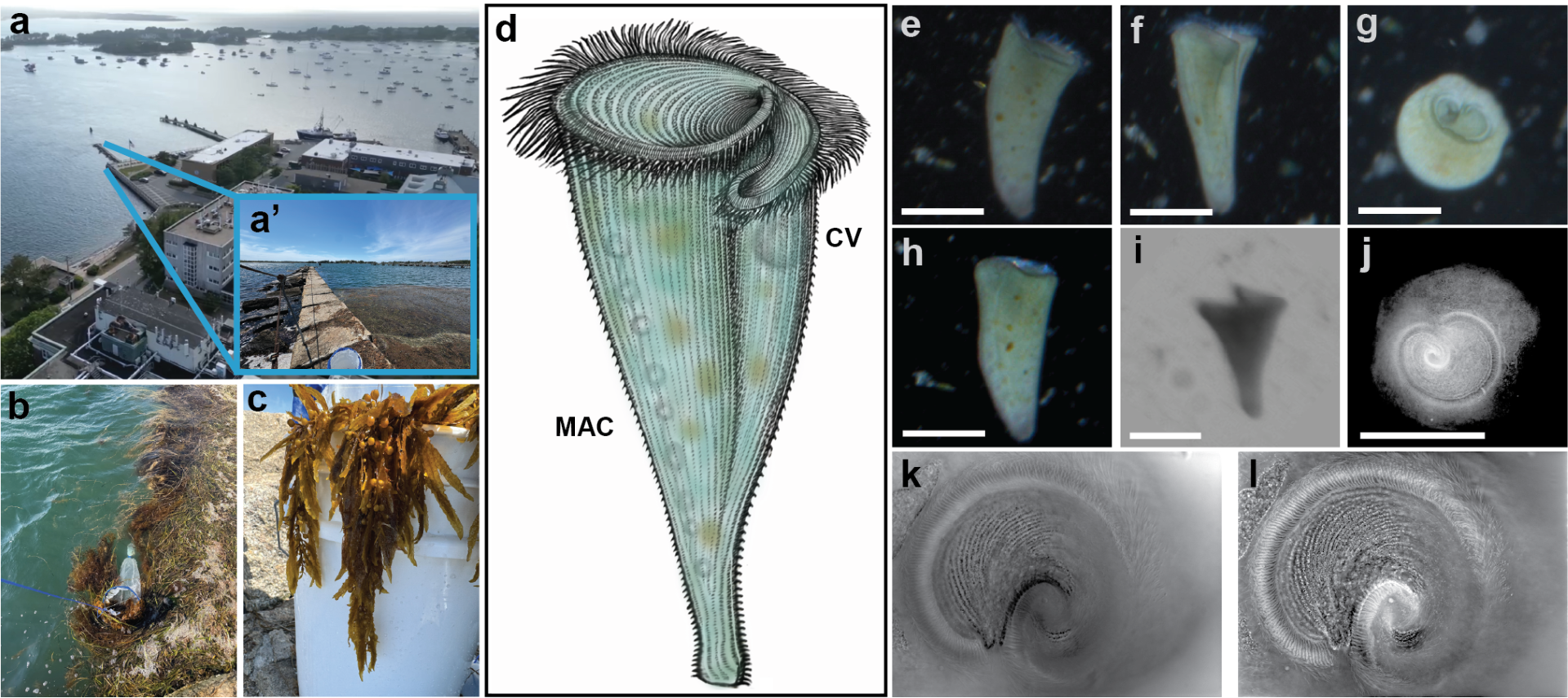
After making some morphological and ecological observations of the organisms, Honda decided to run whole-genome sequencing at MIT and applied comparative genomics to investigate how they adapted to a unique ecological environment.
“Our planet Earth is full of mystery,” Honda said. “I am always fascinated by the various organisms in nature and have learned from their differences and uniqueness. It’s been a great pleasure to enjoy curiosity-driven science as part of MIT’s amazing communities.”


