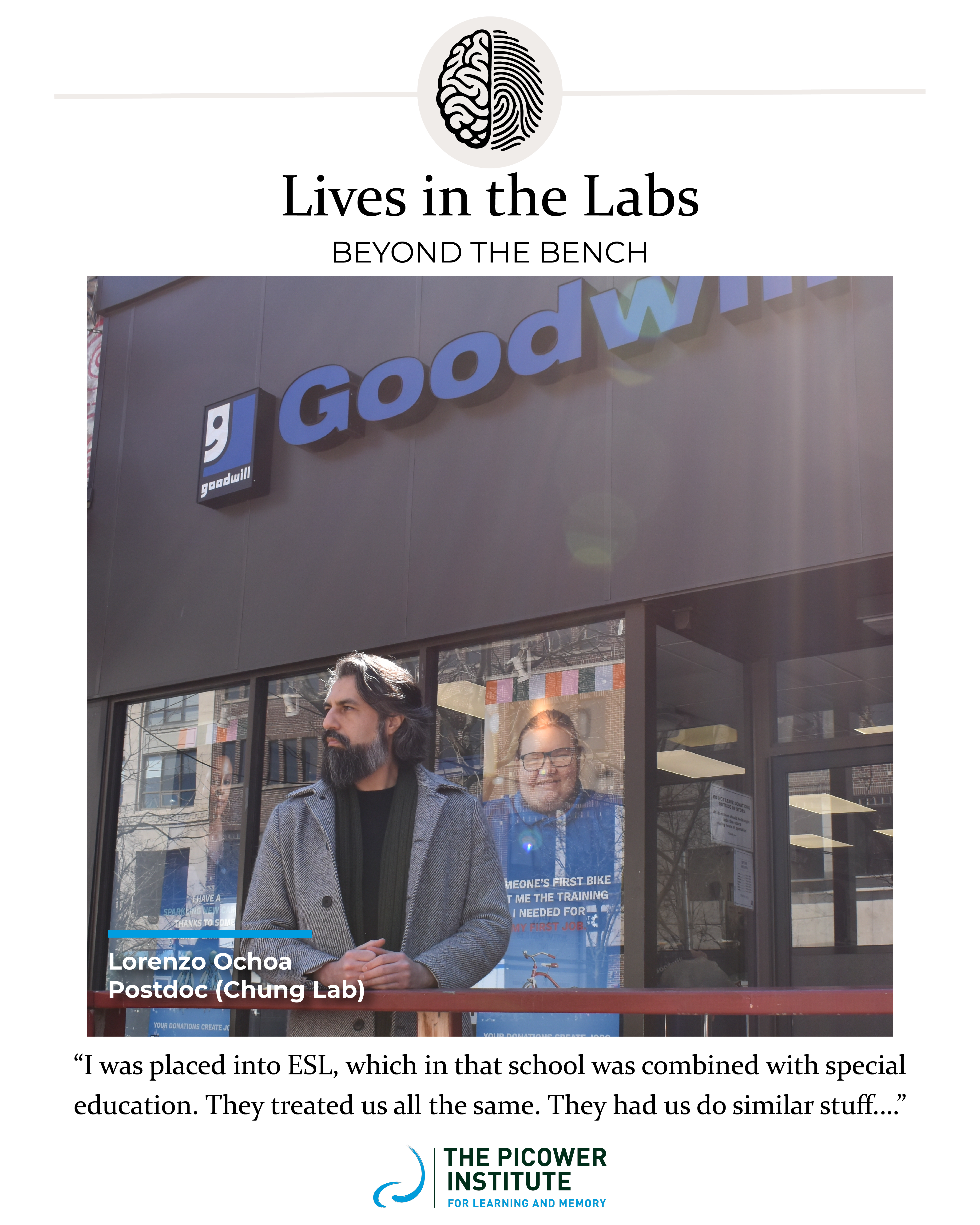
"I grew up poor in Mexico, which is probably very poor in the U.S. I feel lucky that I had a lot of things that were accessible to me through my parents’ work. They sell used clothing and shoes in Mexico at a second-hand store. They buy their merchandise in the U.S., cross the border, and sell it in Mexico. There's a high demand for American brands and certain items that are not exported and only sold the U.S. This merchandise included sometimes all kinds of stuff because one of the common things that they do is they go to Goodwill or other nonprofits and they buy these huge boxes of stuff that they haven't gone through yet or they have gone through but they don't think is very valuable. That's how I would get access to things like encyclopedias—maybe three books out of five. Or video games. Not new video games. Growing up, I didn't really have updated things. I always had the older model of everything, but for me it was a brand new. That’s one of the ways that I learned how to understand English. I didn’t really speak it, but I was interested in video games and American media. So I slowly started to understand little by little… I was born in El Paso, Texas, but then moved to Juarez, Mexico, just across the border. I lived there until I was 13 years old and then we moved back to El Paso. American schools had a lot of resources. The same year that I switched from Mexico to the U.S., the Mexican school had its first computer. They took us to the room where it was. And, they didn't let us get close to it. And then I get to the U.S. and there's a computer lab and everyone can use a computer…I was placed into ESL, which in that school was combined with special education. They treated us all the same. The had us do similar stuff.… My high school, just like elementary and middle school was in a poor part of town. And so, I didn't get advice or anything. They actually brought the military and trades schools to give us an exam to see where we would fit in. The kids who did get counseling were the top 10—not the top 10 percent, because I was top 10 percent which I didn’t know until I graduated. But I was able to find my own way to the University of Texas at El Paso."