


"Your brain runs on harmonics and rhythms. So is it a surprise that brains create music and enjoy it? No surprise to me.
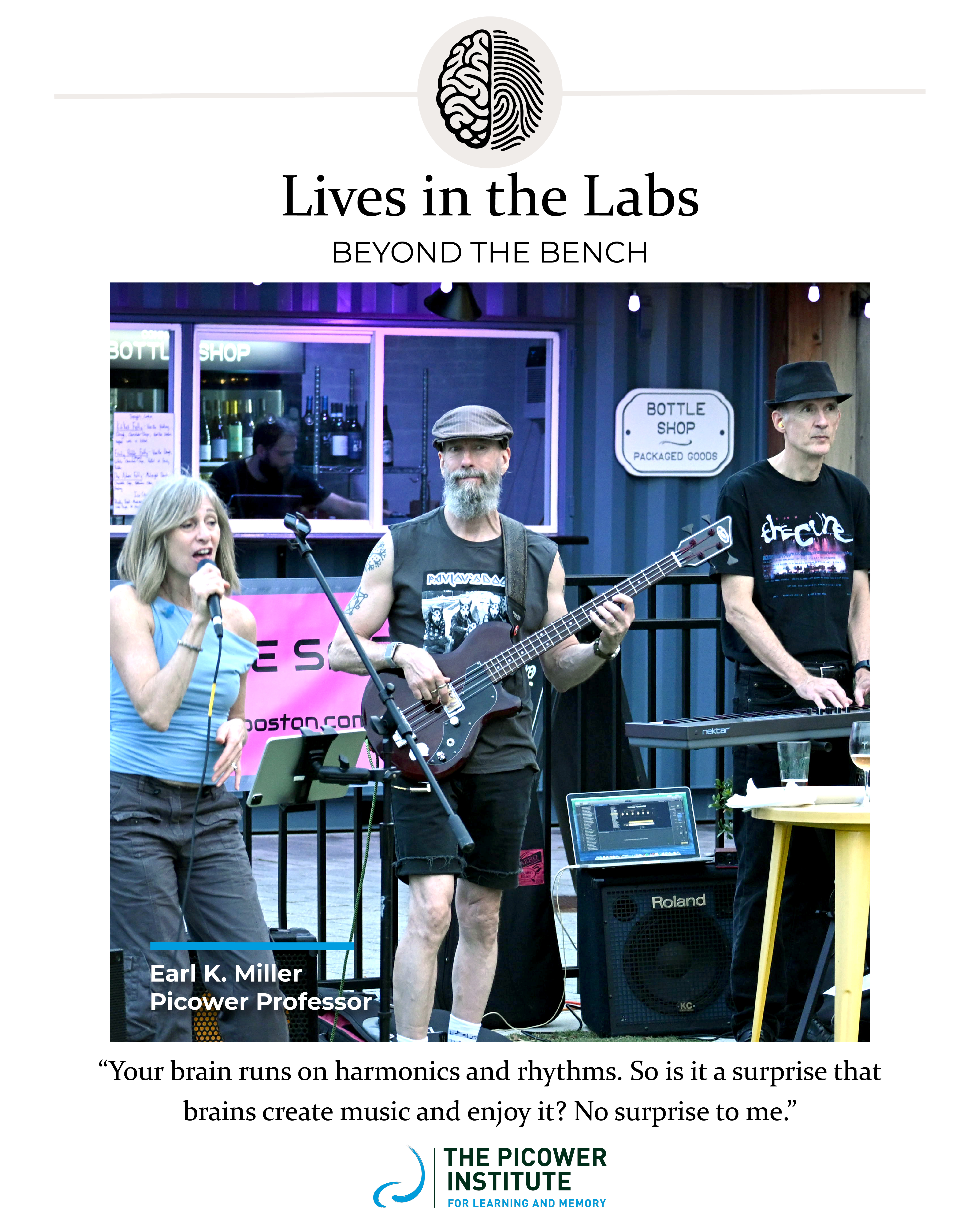
"When I was a kid, I played trumpet seriously for many years. Then I went to college and stopped playing. Close to 20 years ago now I wanted to start playing music again. I had friends who play guitars, but no one played bass. Plus, I love the bass. The bass is the interface that ties the rhythm to the harmony. I was lucky enough to find an excellent teacher. Teachers help in a big way. If you’re left to your own devices, you play stuff that you like, and the reason why you play stuff you like to play is because you're good at playing it. Teachers force you to play stuff that you don't like playing. Plus, much of the lessons are like real brain motor programming stuff--scale patterns and tones and playing them faster and faster. The whole point of that, and doing it in all 12 keys, is that you’re programming the motor primitives into your brain. It forces them into procedural memory more efficiently.
"I like a lot of different types of music and it would be quicker to say what I don't like than what I do. One of the things I like is riff-based instrumental with a circular groove to it. So, while I play in bands (Clever Hans, Pavlov’s Dogz, and What She Said), I also have a solo project (General Bonkers) where I create what I like to listen to (see https://generalbonkers.bandcamp.com/). Most of what you hear in General Bonkers are real instruments recorded live. The only things that are loops are the drum sequences I program. Other than that, if you hear something that sounds like a loop, that’s me playing the whole time. Plus, as a rule, I record it live and in a single take. That challenge makes me a better musician. So does creating something new. It encourages me to play stuff that is outside the box of what I already know."